Most dog owners know summer heat is something to take seriously. But the question people are actually typing into their phones at 10 a.m. before a walk is more specific than that: is it too hot right now for my dog to go outside? And the honest answer is that it depends on who your dog is.
A Husky and a French Bulldog standing next to each other on a 90-degree afternoon are having two very different experiences. A Chihuahua and a Labrador Retriever do not overheat on the same timeline. Size, breed, coat type, age, and even the color of your dog's fur all factor into how quickly heat becomes a problem. Understanding those differences is what moves you from general awareness to actually protecting your specific dog.
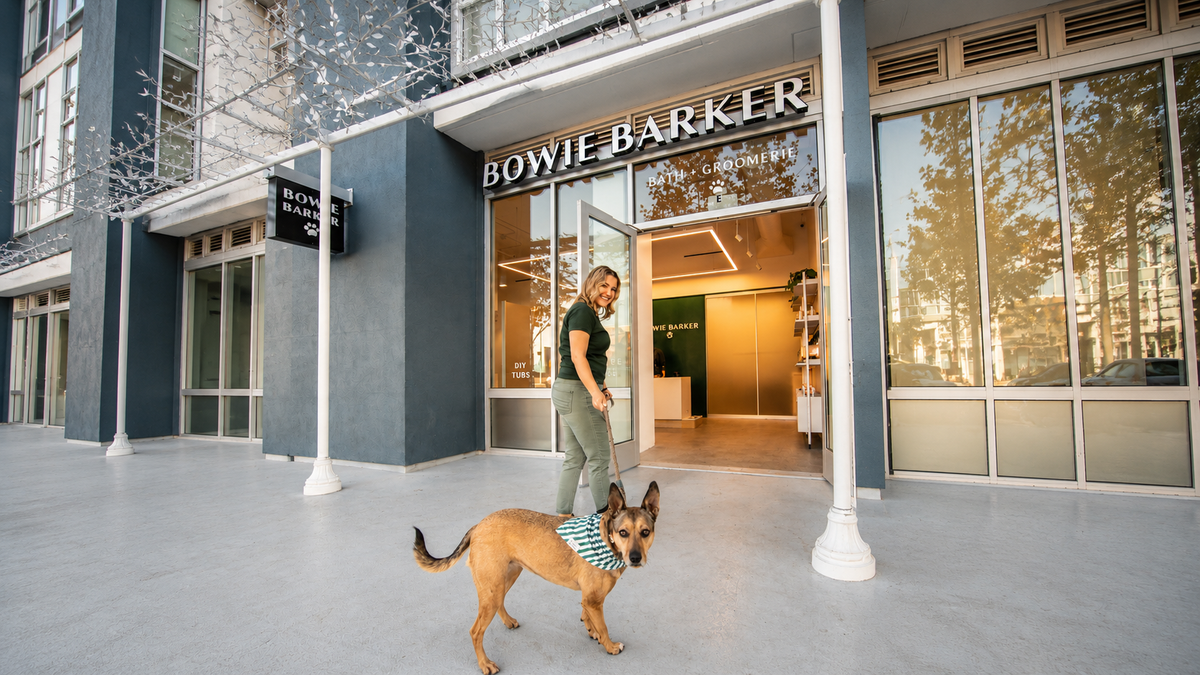
At Bowie Barker, we see dogs of every size and breed come through our doors every week. Summer brings a noticeable shift in what owners ask about, and the questions around heat safety and paw care come up more than almost anything else. This guide is our attempt to give you clear, practical answers based on what the research actually says, and to be upfront about where general advice ends and your dog's individual situation begins.
The Way Dogs Handle Heat, and Where That System Breaks Down
Dogs do not cool down the way we do. They do not sweat across their skin in a meaningful way. Their primary cooling mechanism is panting, which moves air across the moist surfaces of the mouth and respiratory tract and releases heat through evaporation. They also have a modest number of sweat glands in their paw pads, which contribute a small amount to cooling but are nowhere near sufficient on their own.
Panting works well within a reasonable range. The trouble starts when the air temperature rises high enough that the air your dog is pulling in is already warm, which reduces how efficiently evaporation can work. Humidity makes this worse. When moisture in the air is already high, evaporation slows, and heat builds faster. A useful benchmark: if the sum of the air temperature and humidity exceeds 150, most dogs should not be exerting themselves outdoors, according to guidance from Rover and multiple veterinary sources.
The less efficiently a dog can pant, the faster internal heat accumulates. That is why anatomy, not just the thermometer, determines how much risk a given dog is carrying on a hot day.
Not Every Dog Handles Heat the Same Way
Are flat-faced breeds more dangerous to walk in summer heat?
Yes, and the research on this is fairly clear. Brachycephalic breeds (flat-faced dogs), including French Bulldogs, English Bulldogs, Pugs, Boxers, and Boston Terriers, have shortened airways that restrict airflow at the source. Their panting mechanism is structurally less efficient than that of dogs with longer snouts, which means they produce less evaporative cooling per breath and overheat faster under the same conditions.
A 2022 evidence review published in Veterinary Evidence (PMC, U.S. National Library of Medicine) examined four studies on flat-faced breeds and heat-related illness and found moderate-strength evidence that they are significantly overrepresented in heat stroke cases. Separately, research from the Royal Veterinary College identified bulldogs, French bulldogs, and pugs as among the highest-risk breeds for heat stroke, with one in seven dogs affected by heat stroke dying as a result.
For these breeds, the outdoor temperature threshold drops considerably. Most veterinary guidance recommends keeping brachycephalic dogs inside when temperatures exceed 80 degrees Fahrenheit, limiting outdoor time to brief potty breaks rather than full walks. Morning exercise before 8 a.m. or evening walks after the sun has set are the realistic windows for these dogs during summer. Even then, keep it short and watch for labored breathing, heavy drooling, or any sign that the dog is struggling to recover.
How dog size changes the risk
Small dogs face a different but equally real challenge. Because they are physically smaller and lower to the ground, they are closer to the layer of radiant heat that rises off sun-baked pavement and concrete. Their smaller body mass also means core temperature can climb quickly with relatively limited heat exposure. A small dog walking on hot pavement is absorbing heat relative to a much smaller thermal reservoir than a large dog.
Large, heavy-coated breeds are on the opposite end of the problem. They can absorb heat over a longer period before showing obvious signs of distress, but once that heat has built up, it is harder to release. Bernese Mountain Dogs, Saint Bernards, Newfoundlands, and similar breeds may seem comfortable at 75 degrees Fahrenheit and be in genuine danger at 85, even with access to shade and water. The coat that insulates them in winter works against them in summer.
Athletic medium-sized breeds like Labrador Retrievers and Golden Retrievers bring their own risk because of their drive. These dogs will push through discomfort to keep fetching, keep running, keep going. In the heat, the owner has to be the one to stop the session before the dog signals it should stop.
How Hot Is Too Hot to Walk Your Dog?
The consensus across veterinary sources sits at around 85 to 90 degrees Fahrenheit as the upper limit for most healthy adult dogs, with 85 being the more conservative number and the right benchmark for smaller dogs, flat-faced breeds, senior dogs, and overweight dogs. 90 degrees is generally considered the ceiling.
Air temperature alone does not tell the whole story, though. A 2022 study by researcher P. Hudak, published in Pet Behaviour Science, examined ground temperatures across built and natural environments during warm weather and found that surface temperatures in many environments pose a hazard to dogs even at moderate air temperatures. Grass stays dramatically cooler than pavement under the same conditions, which makes route planning as important as temperature monitoring.
Book a grooming appointment at Bowie Barker, and our team can also assess your dog's coat before the hottest weeks of summer arrive. A heavy or matted undercoat significantly increases insulation and makes heat harder to manage.
The Seven-Second Pavement Test
Before any summer walk, place the back of your hand flat on the pavement and hold it there for seven seconds. If you cannot keep it there comfortably for the full count, the surface is too hot for your dog's paws. That is the test. It costs nothing, takes five seconds, and tells you more than the weather app.
The reason it matters is that pavement temperature rises far beyond the ambient air temperature. On a 77-degree day, asphalt can reach 125 degrees. At 87 degrees, it can climb to 143. Concrete runs cooler than asphalt, but not by enough to make it safe during peak summer hours. When you are standing on a sidewalk in shorts and sandals, feeling fine, your dog's paws may be in contact with a surface hot enough to cause burns in under a minute. Paw pads are tough, but they are not burn-proof, and on exposed asphalt, the threshold gets crossed faster than most owners expect.
Concrete heats up less than asphalt, and grass stays dramatically cooler than either. Shaded surfaces cool faster after sunset than those in direct sun. If the seven-second test fails at noon, run it again at 7 p.m. It may well pass by then.
Recognizing Heat Stroke Before It Escalates
The difference between a dog that is hot and tired and a dog that is in trouble is not always obvious in the moment. Knowing what to look for matters because heat stroke escalates quickly, and the earlier you respond, the better the outcome.
The early signs are heavy, rapid panting that does not slow down when the dog rests, excessive drooling beyond what is normal for that dog, and a noticeable reluctance to keep moving. As the condition progresses, vomiting, diarrhea, weakness in the legs, and visible disorientation can follow. In severe cases, collapse.
What it is not: a dog that is panting normally after a run and slows down on their own within a few minutes. Normal recovery panting typically eases within five to ten minutes of rest in a cool environment. If panting is still heavy after that window, or if the gums look pale, bright red, or have a bluish tint, that is a veterinarian call, not a wait-and-see situation.
If you suspect heat stroke, move the dog to a cool environment immediately and apply cool (not cold or iced) water to the body. Cold water can cause blood vessels near the skin to contract and actually slow the cooling process. Get to a vet.
What Summer Heat Does to Your Dog's Paw Pads
Paw pads can blister and burn from hot pavement contact in under a minute at the surface temperatures documented in the research above. The signs are not always immediate. A dog in the middle of a walk on hot pavement may not limp visibly until the pads have had time to cool and the pain becomes more acute. By then, the walk has already caused the damage.
During and after any summer walk, watch for licking or chewing at the paws, holding a paw up, visible redness or soft spots on the pad surface, or a sudden reluctance to step onto surfaces the dog normally handles without hesitation. Any of those warrant a closer look and a call to your vet if the signs are significant.
Beyond acute burns, repeated hot pavement exposure causes pads to dry out, crack, and peel over time. Cracked pads are painful and create an entry point for infection, particularly in dogs that spend a lot of time on treated or abrasive surfaces. For a closer look at prevention and care throughout the season, our guide on how to protect your dog's paws and nose in the summer heat goes into the specifics.
The grooming connection here is practical and direct. Fur that grows between the paw pads traps heat from pavement contact, holds moisture, and collects debris, all of which raise the risk of skin breakdown and infection during summer. Nail length plays a role, too. Overgrown nails shift how weight is distributed across the pad surface, which increases pressure and wear in the wrong places. Our post on why nail trimming matters for your dog's health covers what to look for between grooming visits. Keeping both managed as part of a regular routine is one of the most effective things you can do for paw health in summer. Our Bowie Barker grooming membership for regular paw and coat care is built around exactly this kind of consistent attention.
Building a Summer Routine That Works
The practical answer varies by dog, but a few things hold across the board.
Timing matters more than anything else. Every walk during peak summer should happen before 8 a.m. or after 7 p.m. This is not a suggestion. It is the single most effective change most owners can make, and it costs nothing.
Do the seven-second pavement test before every walk. It takes five seconds and removes the guesswork.
Keep the walk shorter than you think it needs to be. A dog that looks fine at the fifteen-minute mark may be quietly building heat stress. In high temperatures, two shorter outings are safer than one long one.
After any outdoor time, check the paws. Run your hand across the pad surfaces, look for redness or soft spots, and give the paws a warm rinse to remove surface heat and any residue from treated pavement. For a complete approach to paw maintenance throughout the year, our guide to keeping your dog's paws healthy year-round has you covered.
For dogs with longer coats or dense fur between the toes, summer grooming is not optional. Undercoat removal reduces the insulation effect on hot days, and keeping fur trimmed around the paws reduces the risk of heat-related issues at the ground level.
You can review the full range of grooming services and summer-appropriate care options at Bowie Barker to find what fits your dog's coat type and schedule.
Frequently Asked Questions About Dogs and Summer Heat
How hot is too hot to walk a dog?
Most veterinary guidance places the upper limit at around 85 to 90 degrees Fahrenheit for healthy adult dogs of average build. For flat-faced breeds, senior dogs, puppies, and overweight dogs, the threshold is closer to 80 degrees. Humidity matters as much as air temperature. If the combined air temperature and humidity number exceeds 150, conditions are not safe for most dogs to exert themselves outdoors. When in doubt, default to early morning or evening walks and skip the midday outing entirely.
What is the seven-second test for dog paws?
Place the back of your hand flat on the pavement and hold it for seven seconds. If you cannot keep it there for the full count, the surface is too hot for your dog's paws.
Are small dogs more at risk in summer heat than large dogs?
Small dogs are closer to the ground where radiant heat is most intense, and their smaller body mass means core temperature can climb quickly. Large, heavy-coated dogs face the opposite challenge: they absorb heat gradually but struggle to release it once it has built up.
How do I know if my dog has heat stroke?
Early signs include heavy, rapid panting that does not ease with rest, excessive drooling, and reluctance to keep moving. As the condition progresses, watch for vomiting, diarrhea, weakness, stumbling, and disorientation. If you see these signs, move your dog to a cool area immediately, apply cool water to the body, and contact a veterinarian. Heat stroke is a medical emergency and should not be managed at home.
How does grooming help protect my dog in summer heat?
For dogs with dense or double coats, professional grooming removes dead undercoat that traps heat and restricts airflow to the skin. Keeping fur between the paw pads trimmed reduces heat retention from pavement and lowers the risk of moisture-related skin issues. Nail maintenance prevents improper weight distribution across the pad surface, which reduces wear and pressure during summer walks. Regular grooming also gives a trained professional the chance to assess paw pad condition and catch early signs of cracking or heat damage before they become a bigger issue.
What should I do if my dog's paws get burned from hot pavement?
Move your dog off the hot surface immediately and onto cool, shaded ground. Apply cool running water to the pads for several minutes. Do not use ice, as it can cause additional tissue damage by constricting blood vessels near the skin. Check for redness, blistering, or peeling. If burns are visible, or if your dog is limping or consistently licking the affected paw, contact your veterinarian. Mild surface irritation may resolve with rest and keeping the area clean, but burns that involve blistering or broken skin require professional treatment to prevent infection.
Summer is one of the best seasons to be a dog owner, and a little preparation makes all the difference. Book your dog's next grooming appointment at Bowie Barker and let our team help you get your pup's coat and paws ready for the heat.